A leadership signal we see repeatedly across healthcare and senior living is this:
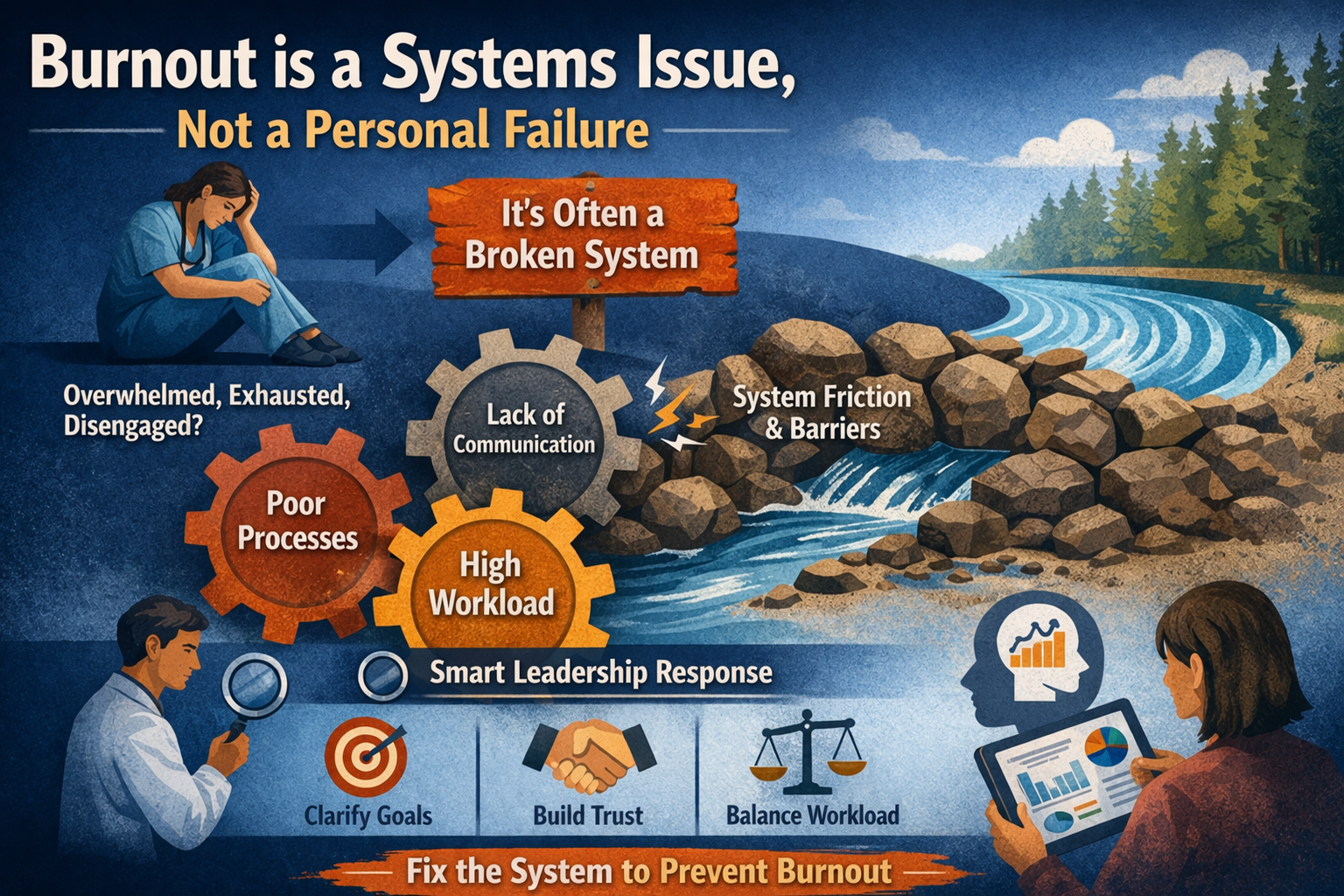
burnout is rarely a personal failure — it’s almost always a systems issue.
When good people are overwhelmed, disengaged, or exhausted, it’s usually not because they care less. It’s because processes, communication, or decision-making structures are creating friction they can’t overcome on their own.
The most effective leaders don’t respond to burnout with resilience training alone. They look upstream — at clarity, trust, workload, and leadership habits — and adjust the system itself.
This is where combining human experience data with leadership development becomes powerful. It allows leaders to see where friction exists and address it thoughtfully, before people reach a breaking point.
If exploring how organizations are approaching this would ever be helpful, I’m glad to share. If not, I hope the perspective itself is useful.
I share these leadership observations occasionally with a small group of senior leaders. If you’d ever prefer I stop, just say the word.